
Reimagine Aging at UCLA's Osher Institute
Don't Get Old Without It

Once a year, I teach a course called Reimagine Aging at UCLA's Osher Institute. (UCLA sometimes takes down the course description, so I'm keeping this version here year-round for anyone who wants to find it!)
“Over the past century, we’ve created the greatest gift in the history of humanity—30 extra years of life—and we don’t know what to do with it! Now that we’re living longer, how do we plan for what we’re going to do? … It’s the greatest achievement in the history of humankind—and all we can say is that it’s going to make Medicare go broke? Why don’t we take that one-third and create new stories, new rituals, new mythologies for people as they age?”
-Joseph Coughlin, MIT Age Lab
The premise is simple but radical: We’re living in an era of unprecedented longevity, yet we’re still using outdated and super-ageist scripts for how to understand older adulthood. This course is about replacing prejudice with research, and defining our experience and our desires for this historically unprecedented stage in human history.
We tackle the big questions: What does the science tell us about healthy aging—and what’s just snakeoil or ageist mythology? How do we move beyond “retirement” as our only framework for understanding what may be 20, 30, or even 40 years of life? How do we design homes, cities, and policies that support flourishing across the entire lifespan? And perhaps most importantly: How can we make this extra third of life meaningful (since society has few defined social roles for us)?
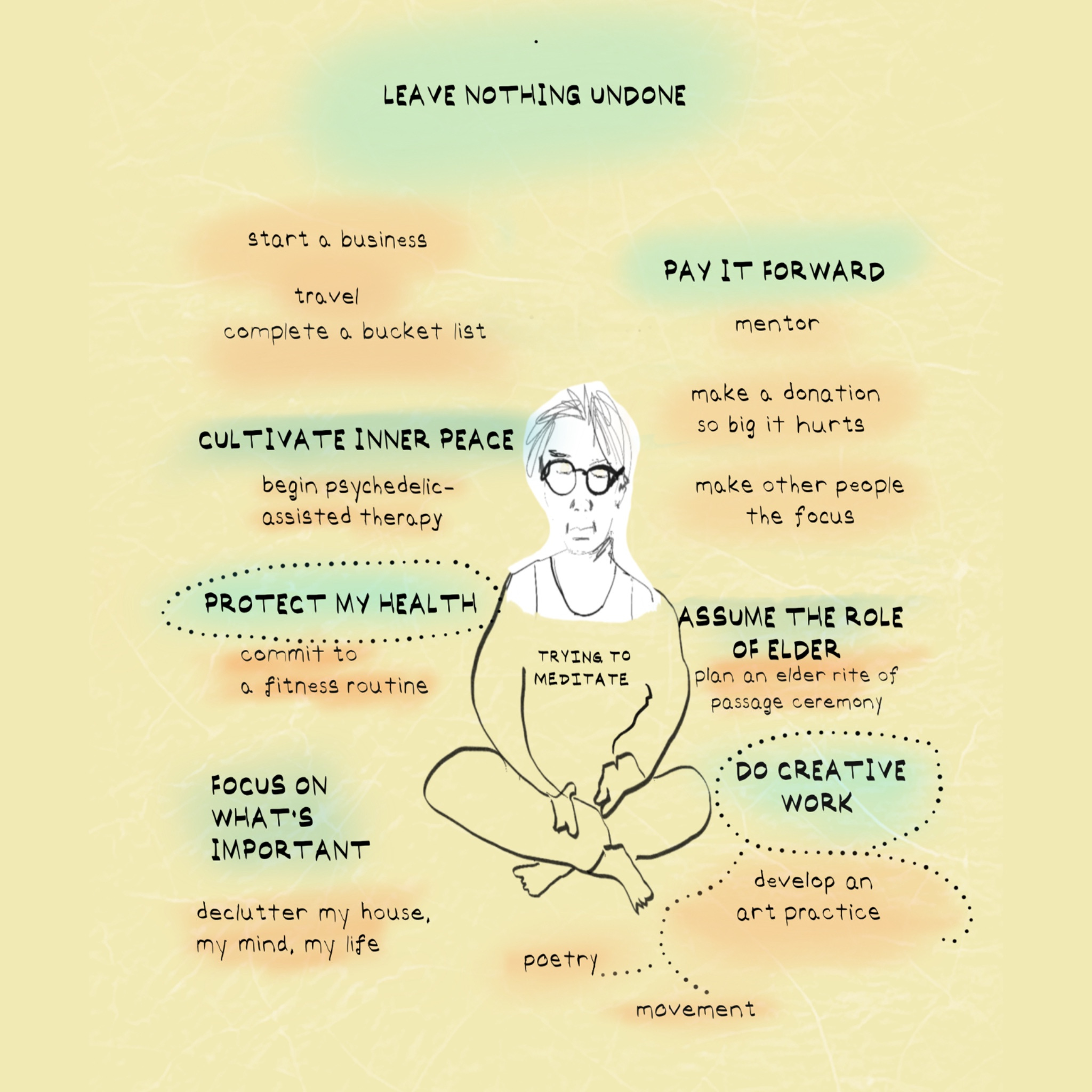
Each week, I share key research insights, then we break into smaller groups for substantive discussion around prompts related to that day’s theme. Topics include the research on healthy aging, ageism and how it shapes our expectations, the inadequacy of retirement as a life stage concept, design and the built environment, housing models, and the pursuit of meaning in older age.
The basics: Eight Fridays starting the first week of January 2027 via Zoom. About an hour of optional light reading or videos each week—enough to enrich the conversation without becoming homework.
When registration opens for the next semester, I’ll post the link here. In the meantime, here’s the 2025 syllabus which will give you a sense of what we cover.